Introduction
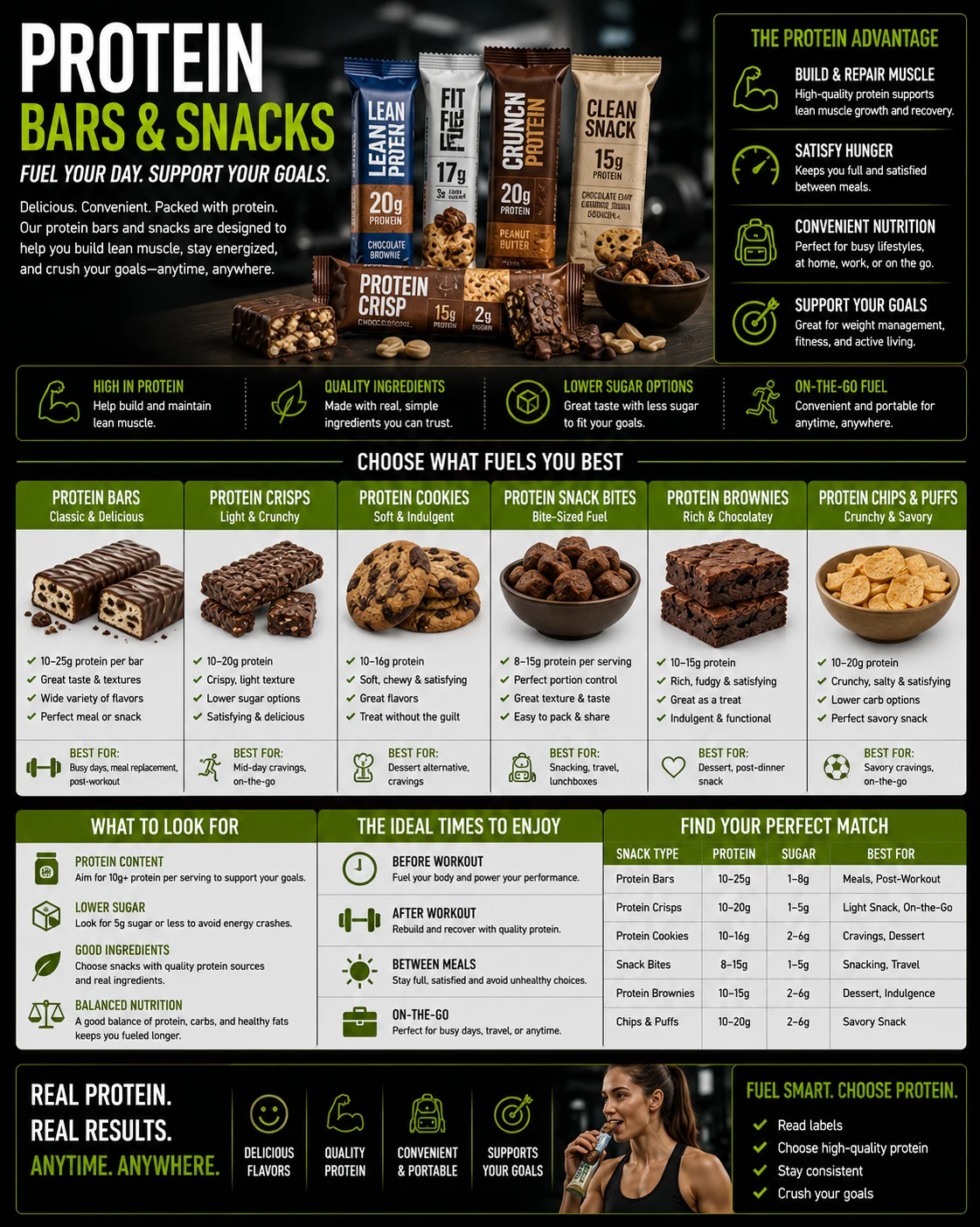
Protein bars can be useful for gym training because they are convenient, portable and easy to fit around workouts. They can help increase protein intake when you do not have time to prepare a full meal or protein shake.
The best protein bar for gym training should provide a useful amount of protein, taste good and fit your goal, whether that is muscle support, weight management, recovery or everyday fitness.
In this guide, we explain what to look for when buying protein bars for gym training in the UK and how to choose the right option for your workout routine.
Why use protein bars for gym training?
Protein bars are useful because they make protein intake more convenient. You can keep them in a gym bag, work bag, car or desk drawer and use them when you need a quick snack.
For gym users, this can be helpful before training, after workouts or during busy days when it is hard to prepare food.
Who should buy gym protein bars?
Gym protein bars can be useful for beginners, strength training users, busy workers, students, athletes and anyone trying to increase daily protein intake.
They may be especially helpful if you train after work, commute to the gym or need a portable snack that supports your fitness routine.
What to look for in protein bars for gym training
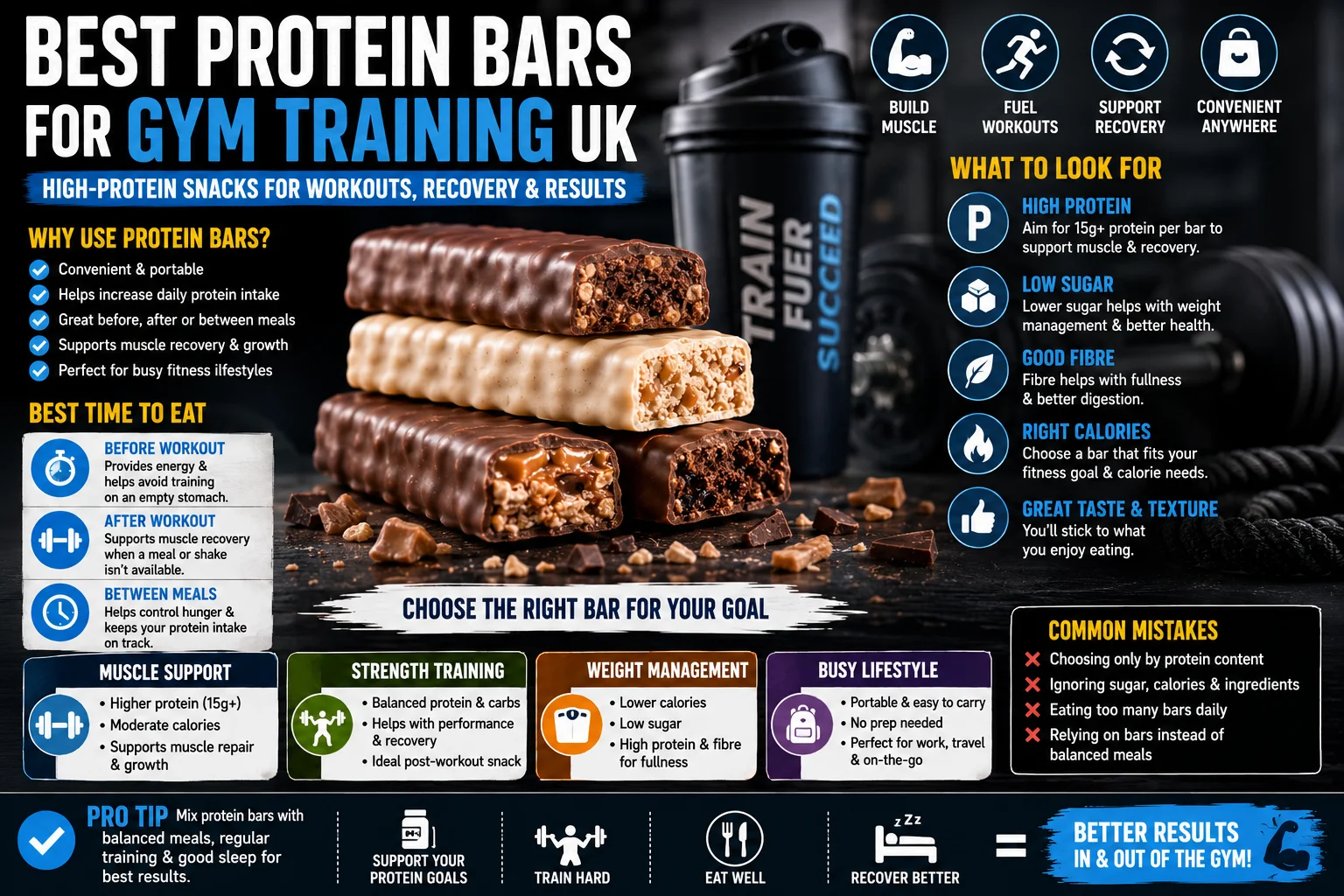
When choosing protein bars for gym training, look at protein content, calories, sugar, fibre, ingredients, taste and texture. A good bar should fit your goal rather than only having the highest protein number.
If your goal is muscle support, protein content matters. If your goal is weight management, calories and sugar also matter. If you plan to eat the bar regularly, taste and digestion are important too.
Best protein bars before workouts
A protein bar can be useful before workouts if you need a small snack and do not want to train hungry. It can be especially helpful if you are going to the gym after work or between meals.
Before training, choose a bar that feels comfortable and is not too heavy. Some people prefer a lighter bar before exercise, while others prefer something more filling.
Best protein bars after workouts
Protein bars can also be useful after workouts if you need protein and do not have time for a meal or shake. They are easy to carry and can help support your daily protein target.
After training, a protein bar is mainly a convenience option. If you are going to eat a balanced meal soon, you may not need one immediately.
Best protein bars for muscle support
For muscle support, choose a protein bar with a useful amount of protein and calories that fit your overall diet. Protein helps support muscle repair and maintenance when combined with regular strength training.
However, protein bars are not magic muscle-building products. Total daily protein, enough calories, progressive training and recovery matter most.
Best protein bars for strength training
Strength training users may benefit from protein bars because they provide a quick way to support daily protein intake. This can be useful after lifting weights, during long workdays or when meals are delayed.
If you are lifting regularly, choose bars that fit your protein goal without adding too much sugar or unnecessary calories.
Best protein bars for cardio and fitness classes
Protein bars can also be useful for people doing cardio, circuits, HIIT or fitness classes. They can help you avoid training while very hungry and can be useful as a post-workout snack.
For cardio and weight management goals, check calories carefully. A very calorie-dense bar may not suit your goal if you are trying to lose weight.
High-protein vs low-sugar gym bars
High-protein bars are useful if your main goal is increasing protein intake. Low-sugar bars may be better if you want a sweet snack with less sugar than a normal chocolate bar.
The best choice depends on your goal. For muscle support, prioritise protein. For weight management, check protein, calories and sugar together.
Protein bars vs protein shakes for gym training
Protein shakes are often quicker to drink and can be better value per serving. Protein bars are more portable and usually feel more like a snack.
If you want quick protein after training, a shake may be better. If you want something filling and easy to carry, a protein bar may be better.
Protein bars vs normal gym snacks
Protein bars usually provide more protein than many normal snack bars, chocolate bars or cereal bars. This can make them more filling and better suited to gym training goals.
However, some protein bars are still high in calories, sugar or fat. Always compare the nutrition label before assuming a protein bar is automatically better.
Are cheap protein bars good for gym training?
Cheap protein bars can be good for gym training if they provide useful protein, reasonable calories and a taste you enjoy. They can be a good option for beginners or regular users who want to keep costs down.
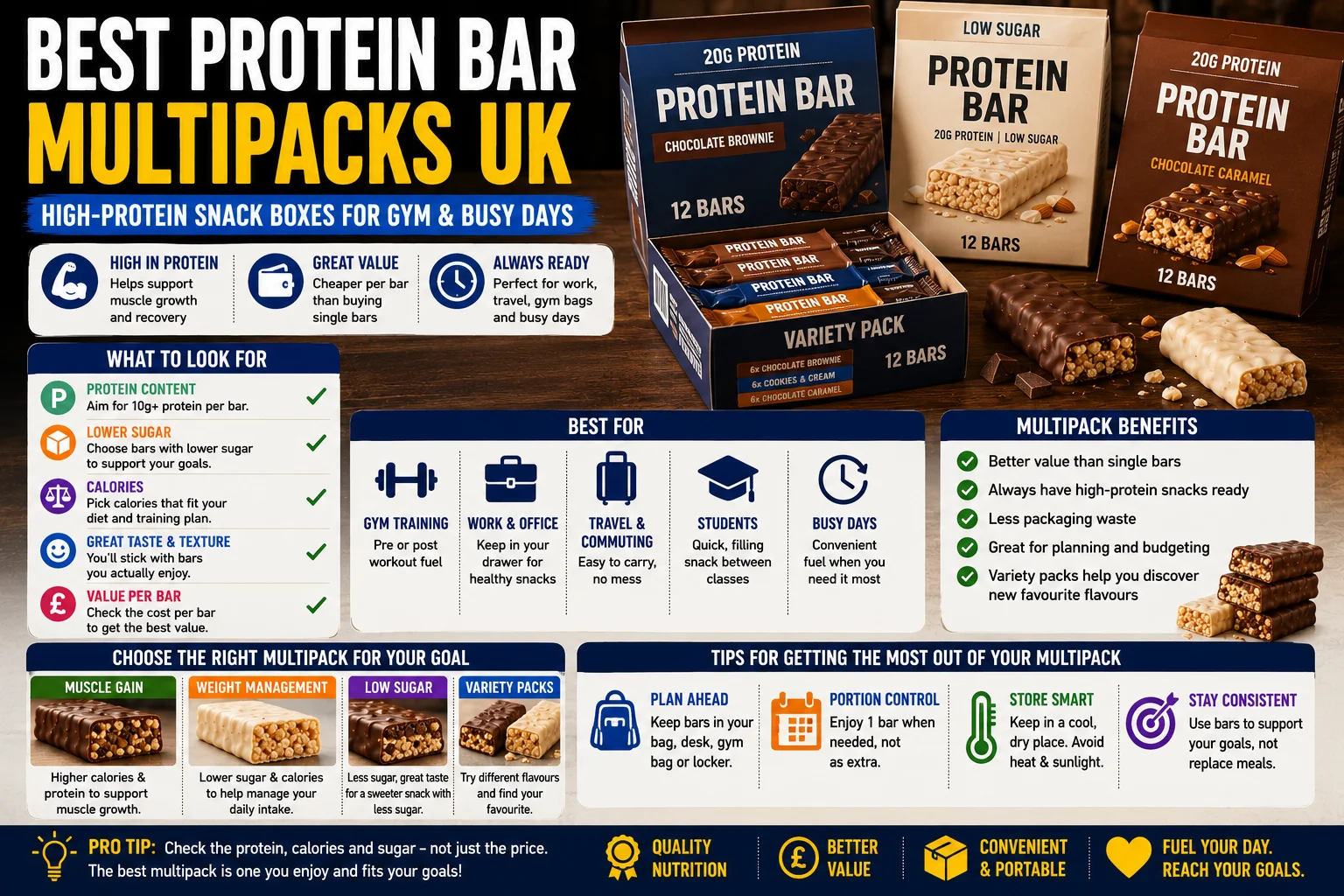
Multipacks may offer better value, but try a smaller pack first if you are unsure about the flavour or texture.
Are protein bars good for beginners?
Yes, beginners can use protein bars as a convenient snack around training. They can help increase protein intake and make it easier to stay consistent.
Beginners should still focus on balanced meals first. Protein bars should support a good diet, not replace normal food completely.
How many protein bars should gym users eat?
Most gym users should treat protein bars as a convenient snack rather than a main food source. One bar on training days or busy days can be useful if it fits your calories and protein target.
If you are eating multiple protein bars every day, it may be worth reviewing your overall diet and trying to get more protein from normal meals as well.
Best time to eat protein bars for gym training
The best time to eat a protein bar depends on your routine. You can eat one before training if you need energy, after training if you need protein, or between meals if you need a filling snack.
There is no magic timing. What matters most is your total daily protein, calories and consistency over time.
Common mistakes when buying gym protein bars
One common mistake is choosing a bar only because it has the most protein. Taste, calories, sugar, fibre and ingredients also matter.
Another mistake is assuming all protein bars are healthy. Some bars are closer to chocolate bars with added protein, so always check the full nutrition label.
Final thoughts
The best protein bars for gym training are convenient, good-tasting and suitable for your fitness goal. They can help with protein intake, workout snacking and busy routines.
For muscle support, choose a bar with useful protein. For weight management, check calories and sugar. For regular use, choose a bar you enjoy and can afford consistently.